



Intent: research. These digital hall of fame profile reading level guidelines answer a question schools encounter the moment their first inductee profile goes live: who, exactly, is this story for?
A sixth-grader stopping at a lobby touchscreen on a gym tour, a grandparent scrolling through the class of 1978, a college scout reading about a record-breaking sprinter, and a first-generation family member who just watched their daughter inducted—all four land on the same profile. Getting the words right for all of them at once is not accidental. It requires deliberate choices about sentence length, vocabulary, structure, and layout that most schools never document before they start writing.
This guide gives athletic directors, administrators, archive stewards, and booster leaders a practical framework for writing and reviewing inductee profiles that are clear to every visitor your hall of fame will ever welcome.
When profile copy works, visitors linger. When it does not, they tap past it in seconds. The difference is almost never the quality of the athlete’s story—it is the density of the prose that carries it.

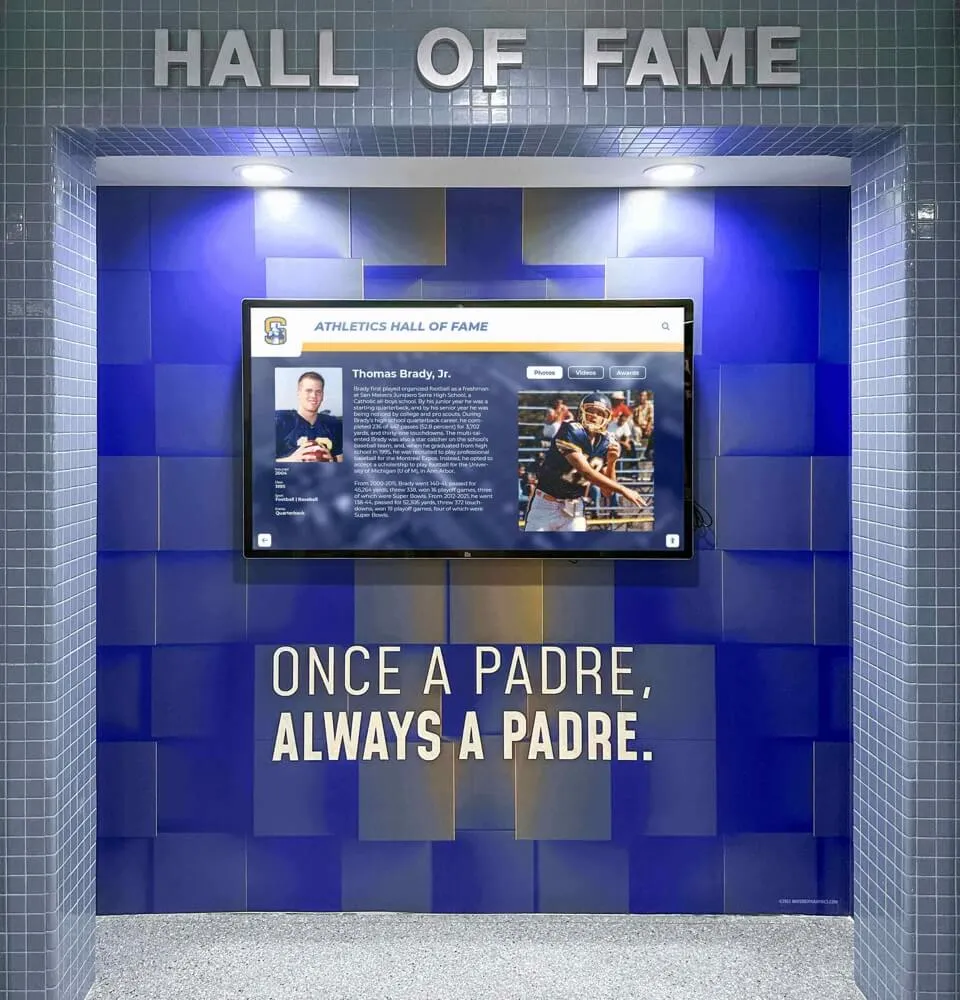
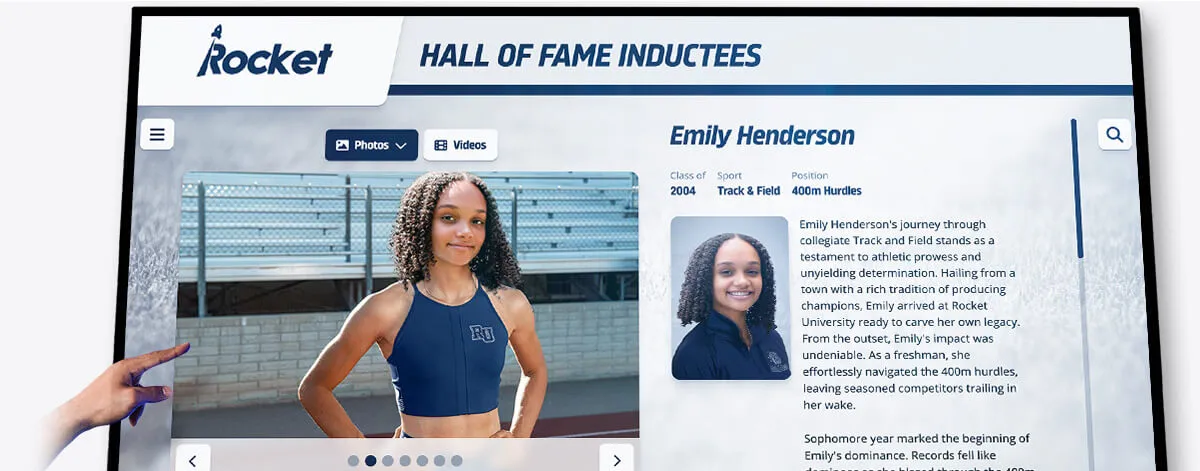
A well-structured inductee profile delivers the essential story at a glance, then rewards deeper reading.
Why Reading Level Matters for Your Digital Hall of Fame
Digital hall of fame profile reading level guidelines exist because a physical plaque communicates one way—someone engraves twenty words and calls it done. A touchscreen profile is a different medium. It can carry a full paragraph, a sidebar of records, a career timeline, and a pull quote. That freedom is also a trap: more space invites more complexity, and complexity drives visitors away.
According to the Plain Language Action and Information Network, government and public-sector content aimed at general audiences performs best when written at or below a sixth-grade Flesch-Kincaid reading level. Interpretive signage in museums, a comparable public-facing context, typically targets a seventh- or eighth-grade level to balance accessibility with authority. School hall of fame profiles occupy the same space. Your audience is not a scholarly journal’s readership—it is a broad community that spans ages, educational backgrounds, and levels of familiarity with your sport or institution.
The goal is not to make profiles simpler. It is to make them clearer. A profile written at a seventh-grade reading level can still honor a state-record pole vaulter with full respect for the complexity of the achievement. Clarity and depth are not opposites.
Who Reads Your Inductee Profiles? Understanding the Full Audience
Before you can set a reading level target, you need a clear picture of the people who will actually stand in front of your touchscreen hall of fame display.
Current students (ages 12–18): Often the most frequent visitors during class transitions, athletic events, and school tours. Many read independently at or slightly above their grade level. Short sentences and active verbs hold their attention; dense paragraphs lose it within three seconds.
Elementary-age visitors: On field trips, family event nights, or accompanying siblings to games, younger children encounter hall of fame displays too. A profile does not need to be written for a nine-year-old, but it should not be written in a way that excludes them from the highlights.
Family members of inductees: Parents, spouses, and siblings are emotionally invested readers who often have no deep knowledge of sport-specific statistics or conference acronyms. They want to feel the weight of the honor—not translate jargon.
Alumni from different eras: Graduates from the 1960s read differently than 2015 graduates. Dense, formal prose feels appropriate to older visitors; punchy, present-tense storytelling resonates with younger ones. A well-calibrated reading level bridges that gap.
Community members without direct school ties: Local supporters, facility visitors, and prospective families who attend open houses are often reading about people they have never met. Context and clarity are essential.
College scouts and media: Visiting professionals want fast access to records, dates, and accomplishments. Buried stats are a friction point for this audience.
Understanding this spread is why a single rigid reading rule fails. What schools need is a tiered approach—short, scannable highlights written for the broadest audience, with richer detail available for visitors who choose to go deeper.
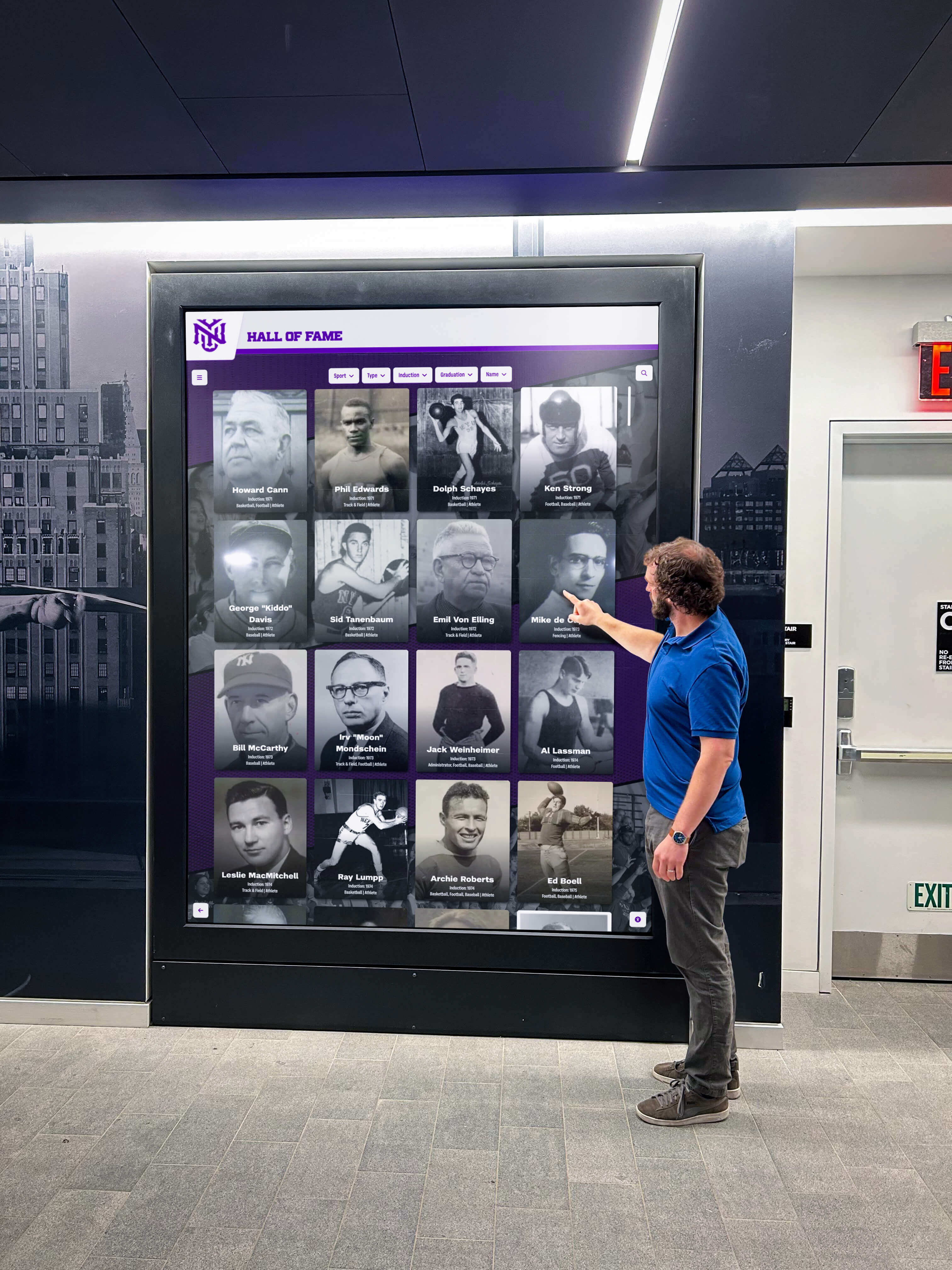
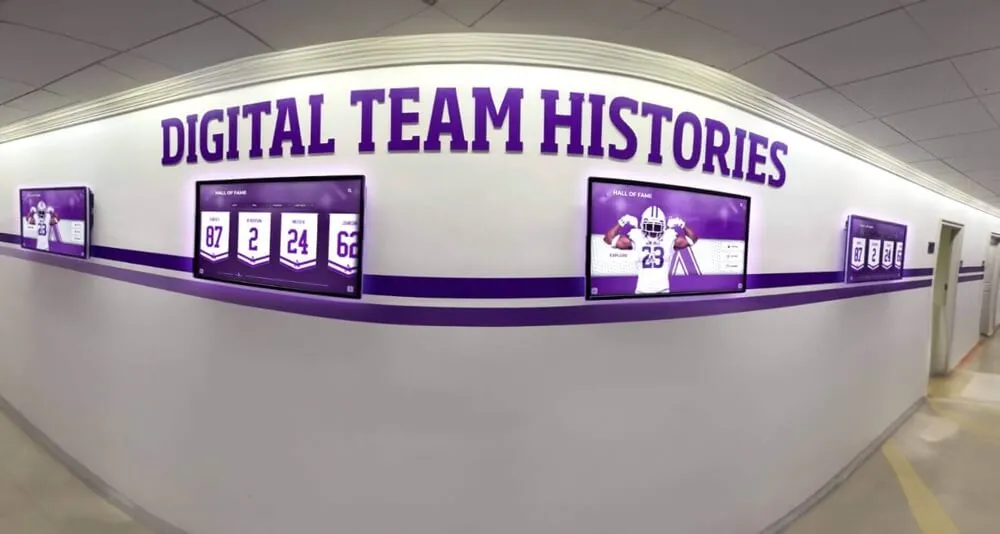
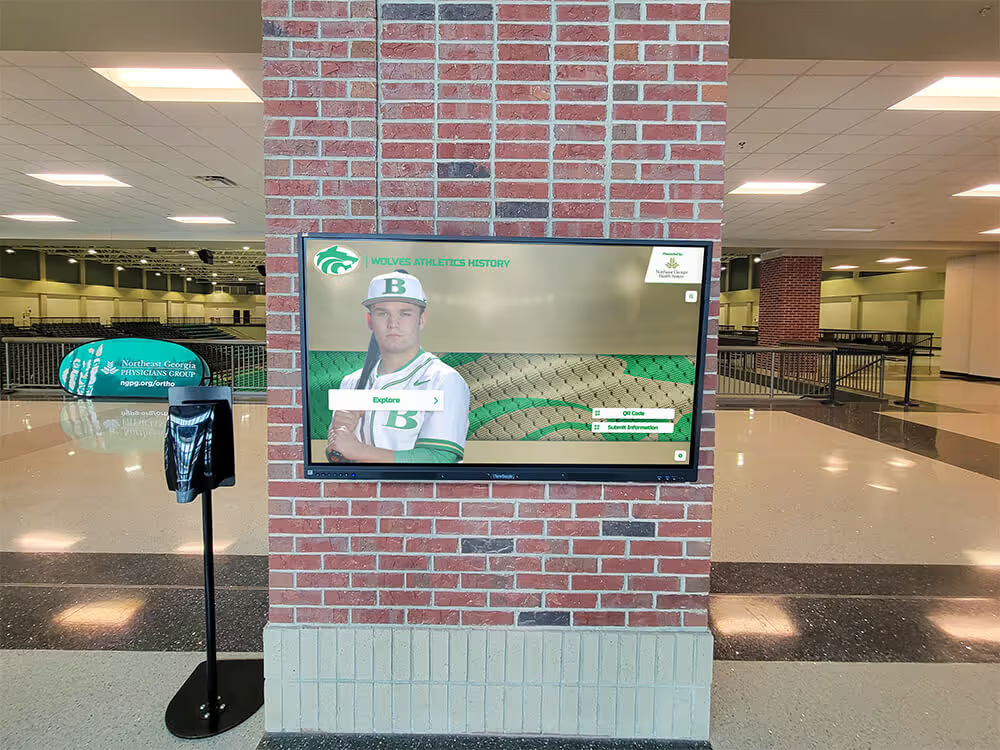
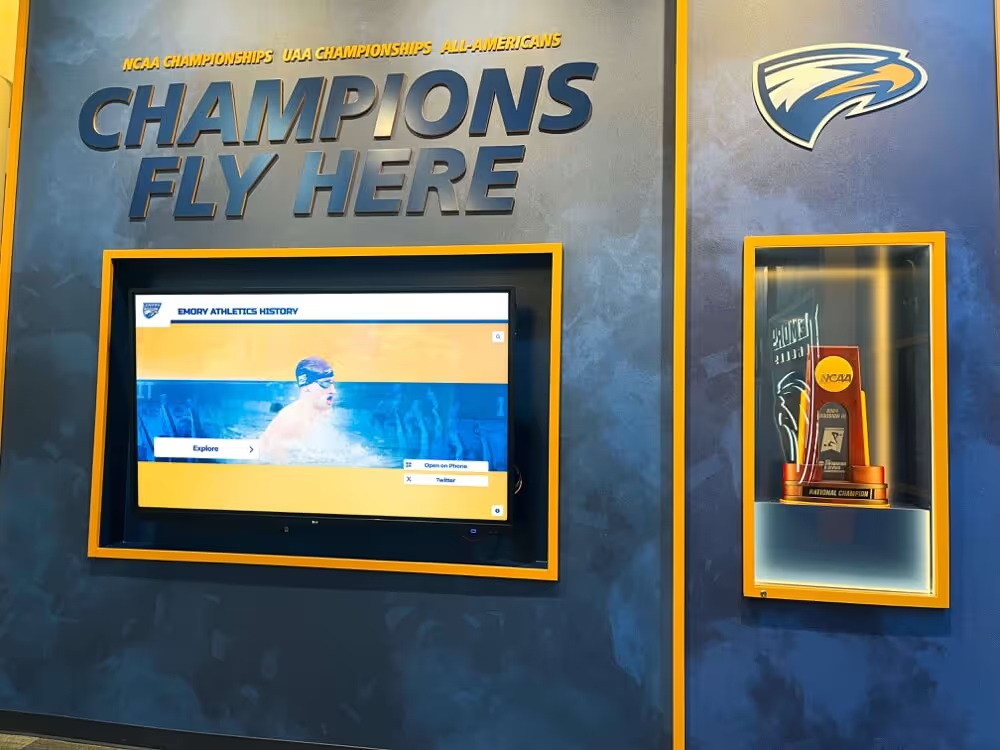
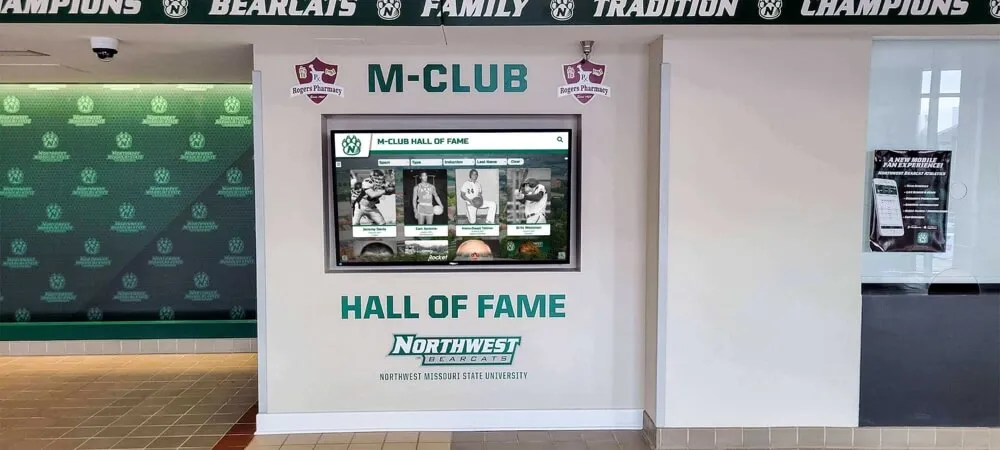
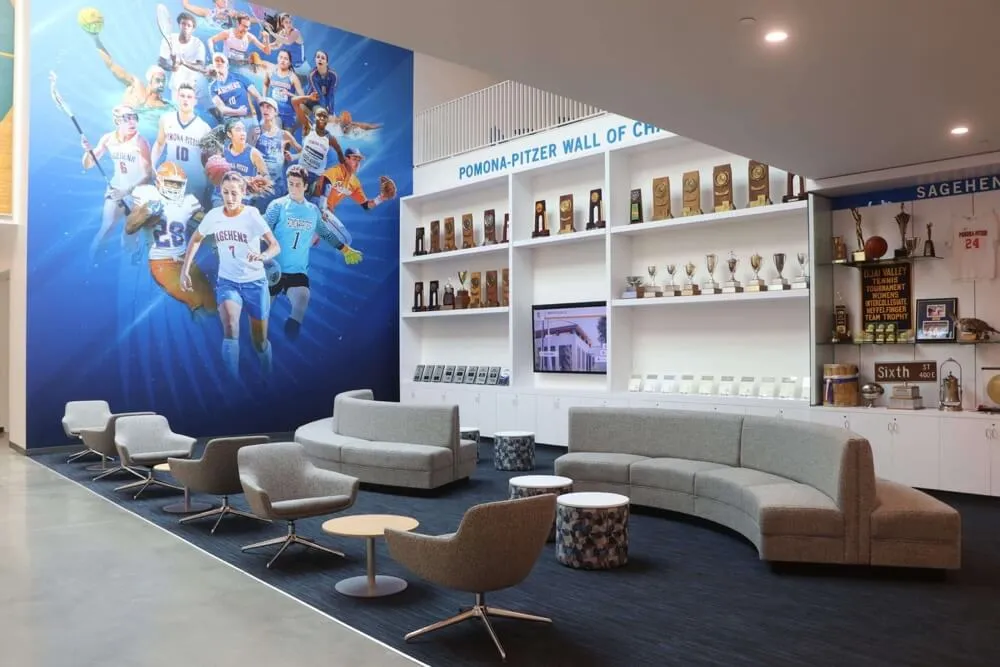
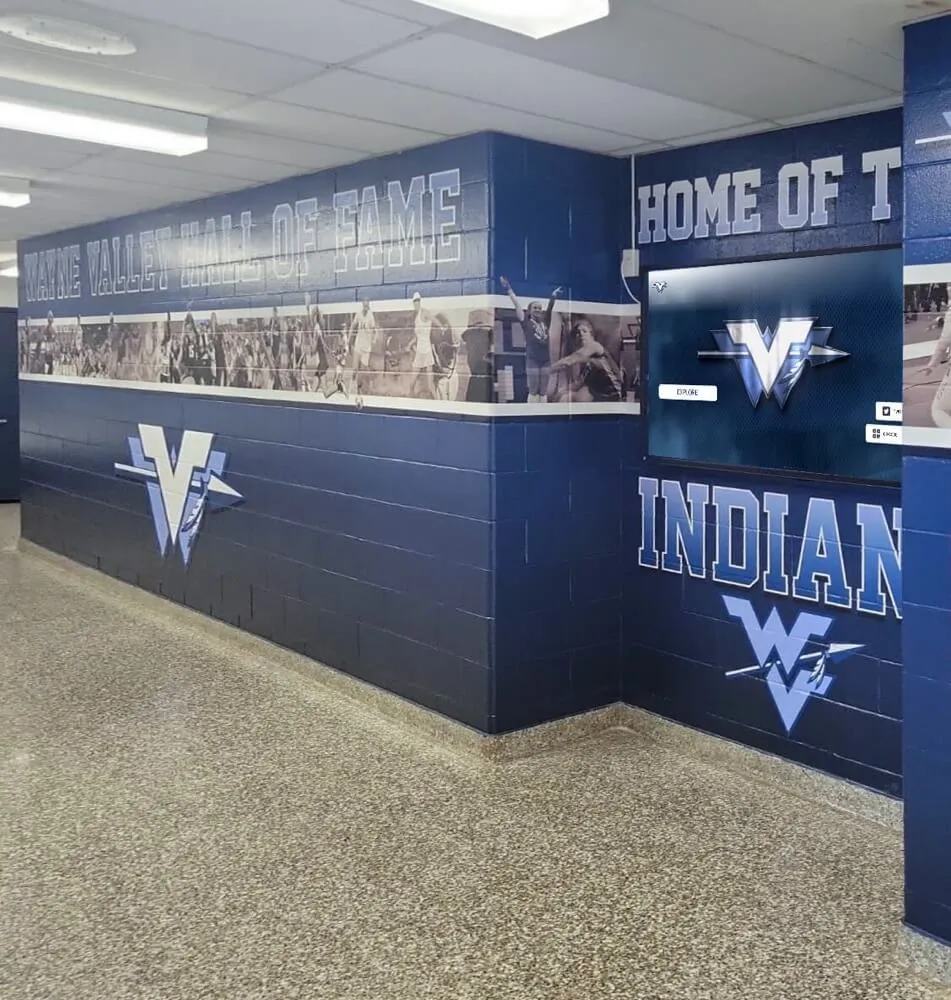
Visitors of all ages and backgrounds engage with digital hall of fame displays. Profile writing must work for all of them.
The Tiered Profile Structure: Short, Medium, and Deep
Effective digital hall of fame profiles follow a tiered content model. Think of it as three concentric rings, each written for a different depth of engagement.
Tier 1: The Headline Card (Grades 4–6 Reading Level)
This is the first thing any visitor sees—the name, class year, sport, and one defining achievement. Every word here should be immediately understandable by a ten-year-old without context.
Write: “Three-time state wrestling champion. Set a school record that has stood for 22 years.” Avoid: “Three-peat IHSA Class 2A bracket champion with an undefeated dual-meet record spanning 36 consecutive bouts across three varsity seasons.”
The second version is accurate. But on a lobby touchscreen at 7:45 a.m., it will not be read. The first version will.
Tier 2: The Profile Summary (Grades 6–8 Reading Level)
A three-to-five sentence paragraph that expands the headline with context, texture, and one human detail. This tier rewards visitors who tap through and gives the inductee’s story a shape beyond statistics.
Write short sentences. Use active verbs. Name the sport, the era, the conference, and one moment that captures why this person belongs here. Avoid subordinate clauses stacked inside each other.
Target: 15–22 words per sentence on average. No sentence longer than 30 words.
Tier 3: The Extended Record (Grades 8–10 Reading Level)
Career stats, conference titles, post-graduation achievements, and coach tributes live here. This is the section where you can be more specific, include acronyms with their spelled-out form on first use, and let the depth of the accomplishment breathe.
Even here, paragraph length matters. Use three-to-five sentence paragraphs and break records into a bulleted or tabular list rather than embedding them in prose.
Reading Level Benchmarks by Profile Section
Use this reference table when reviewing profile drafts for your digital hall of fame display:
| Profile Section | Recommended Grade Level | Max Sentence Length | Format Notes |
|---|---|---|---|
| Headline / Tagline | Grade 4–5 | 12 words | One sentence only |
| Summary Paragraph | Grade 6–7 | 22 words average | 3–5 sentences |
| Career Highlights | Grade 7–8 | 25 words | Bullet list preferred |
| Records & Stats | Grade 8–9 | N/A | Table or list format |
| Extended Bio / Legacy | Grade 8–10 | 28 words | 2–3 paragraphs max |
| Coach or Community Quote | Grade 6–8 | 20 words | Attribute clearly |
You can test reading level using free tools like the Hemingway App or Readable.com—paste in your profile draft and check the grade-level score before it goes live.
Vocabulary Guidelines: What to Use, What to Avoid
Word choice is the fastest lever you have on readability. A few specific substitutions dramatically improve the accessibility of your inductee profiles without reducing their authority.
Prefer plain terms over sport jargon on first reference:
- “conference championship” before “Skyline Conference Championship” (spell out the conference)
- “career wins” before “all-time dual-meet W/L”
- “state playoffs” before “MHSAA Division I postseason”
Spell out acronyms the first time, every time:
- NAIA (National Association of Intercollegiate Athletics)
- CYO (Catholic Youth Organization)
- GPA (grade point average)
Use active, present-tense constructions for the headline tier:
- “Holds the school record” instead of “The school record is held by”
- “Earned three letters” instead of “Three letters were earned”
Avoid insider cultural references without explanation:
- “Section 4 champion” means nothing to a visitor from another state; “regional state qualifier” is universal
Name the achievement before the credential:
- “First student to qualify for the national championships, earning a spot on the All-American team” beats “All-American and national qualifier”
According to a 2023 Nielsen Norman Group study on digital content engagement, users who encounter unfamiliar jargon in the first two sentences of an online text are 57% less likely to read past that point. That statistic was measured on general web content, but the principle applies directly to public-facing recognition displays where your visitor has no obligation to keep reading.

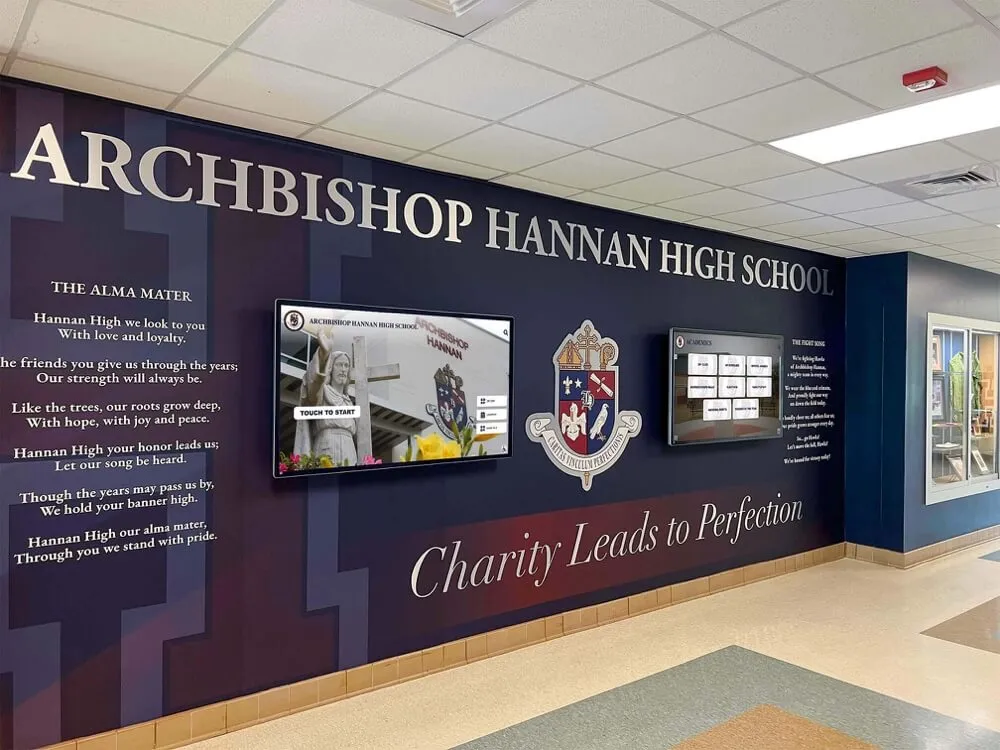
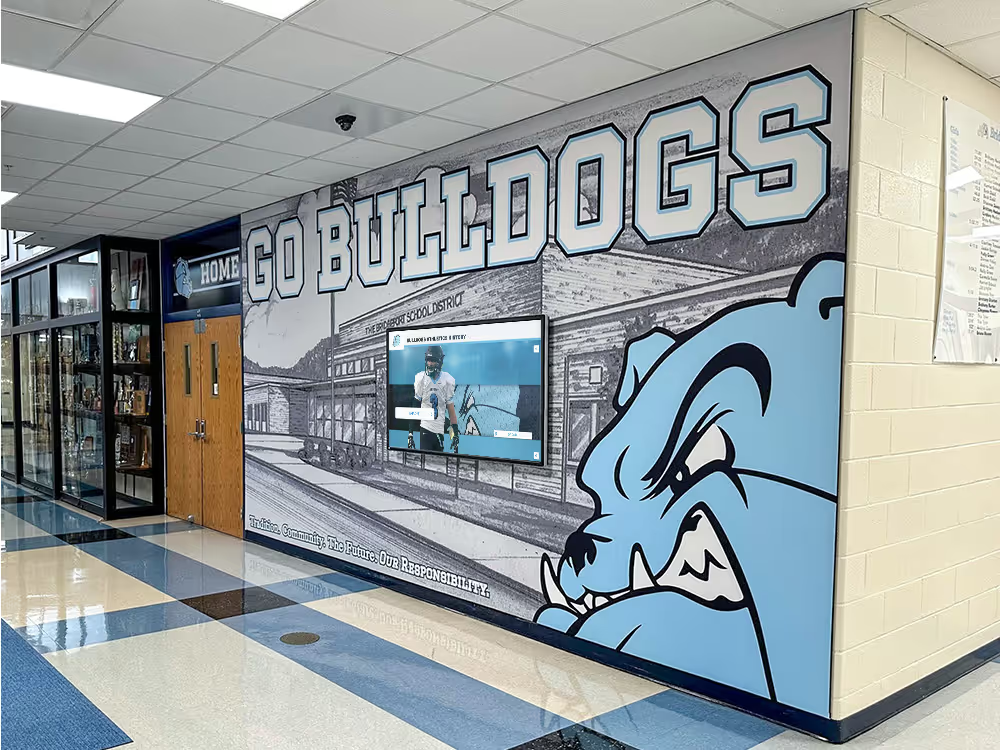
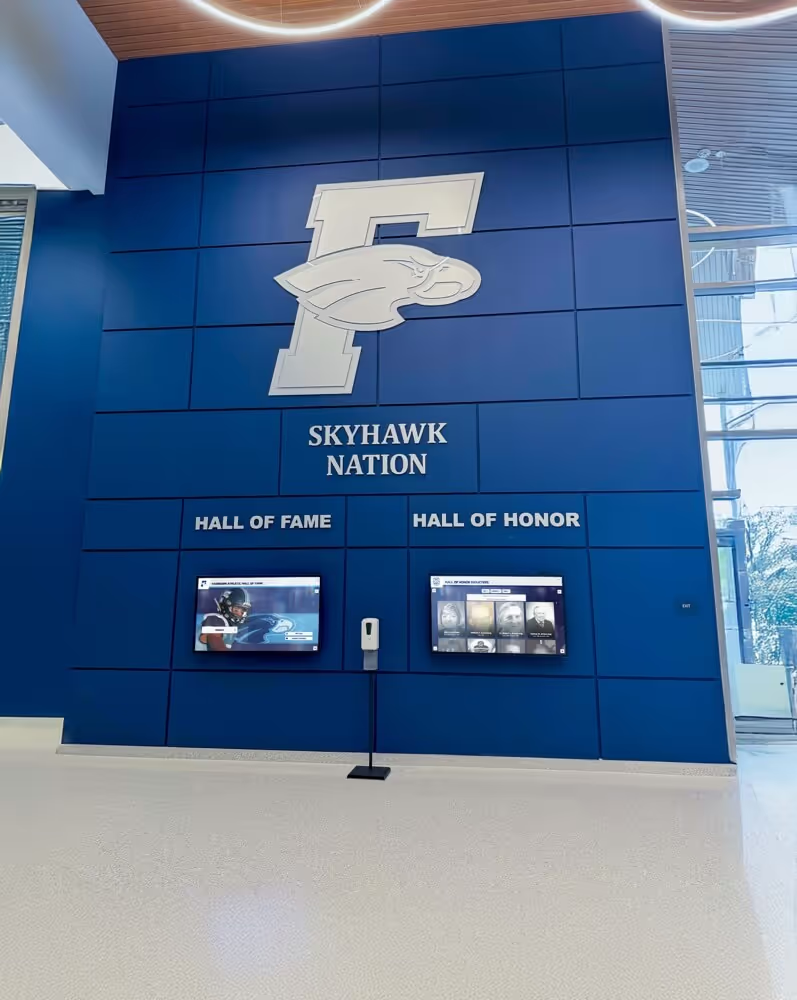
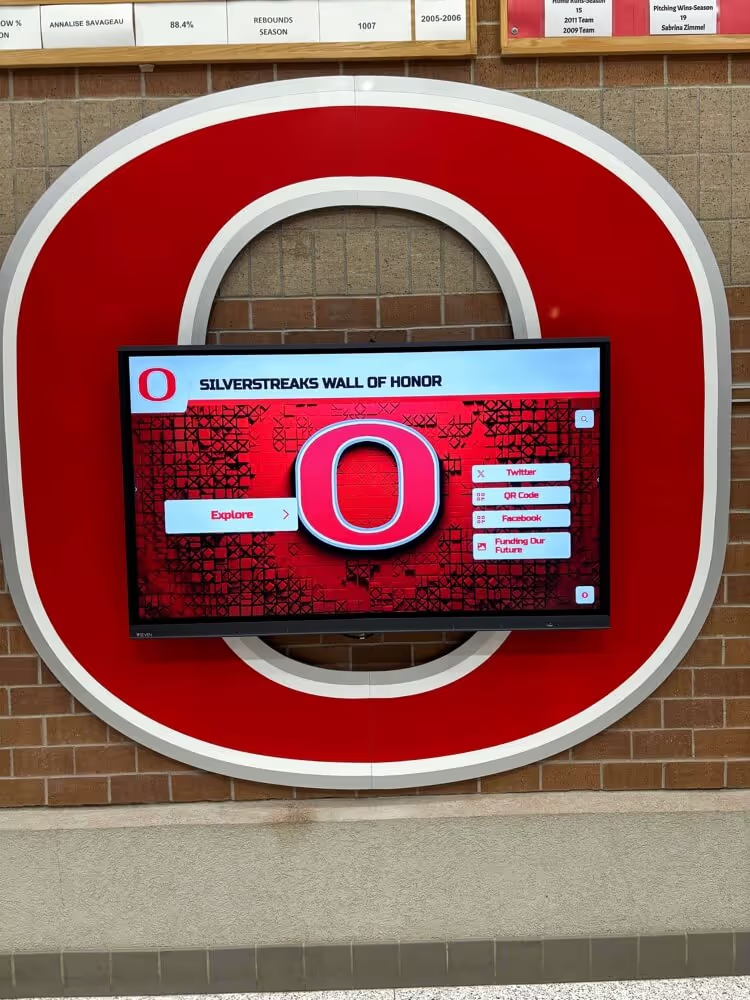
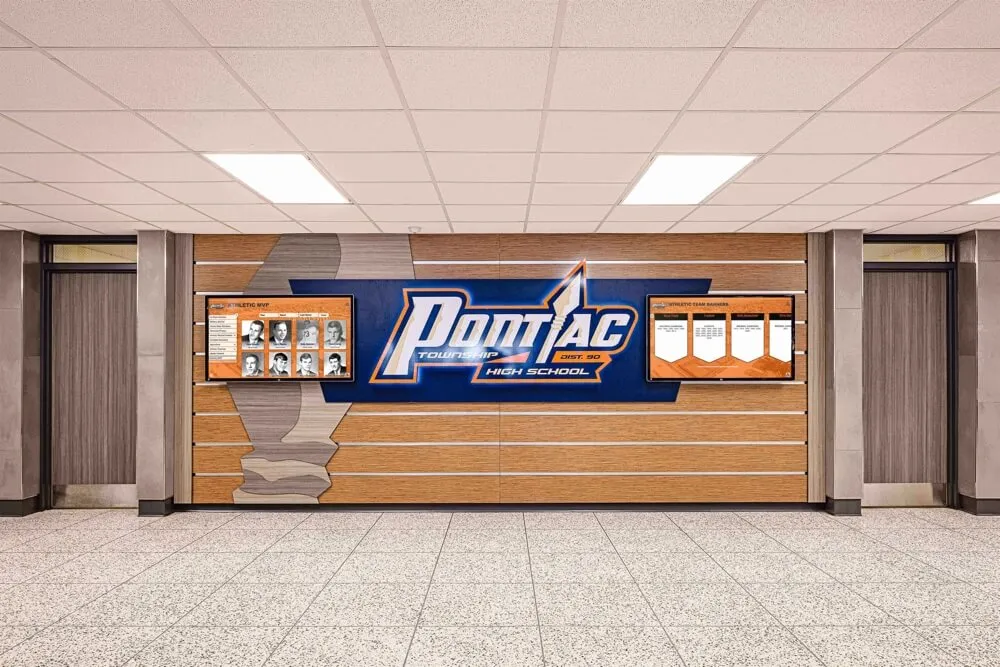
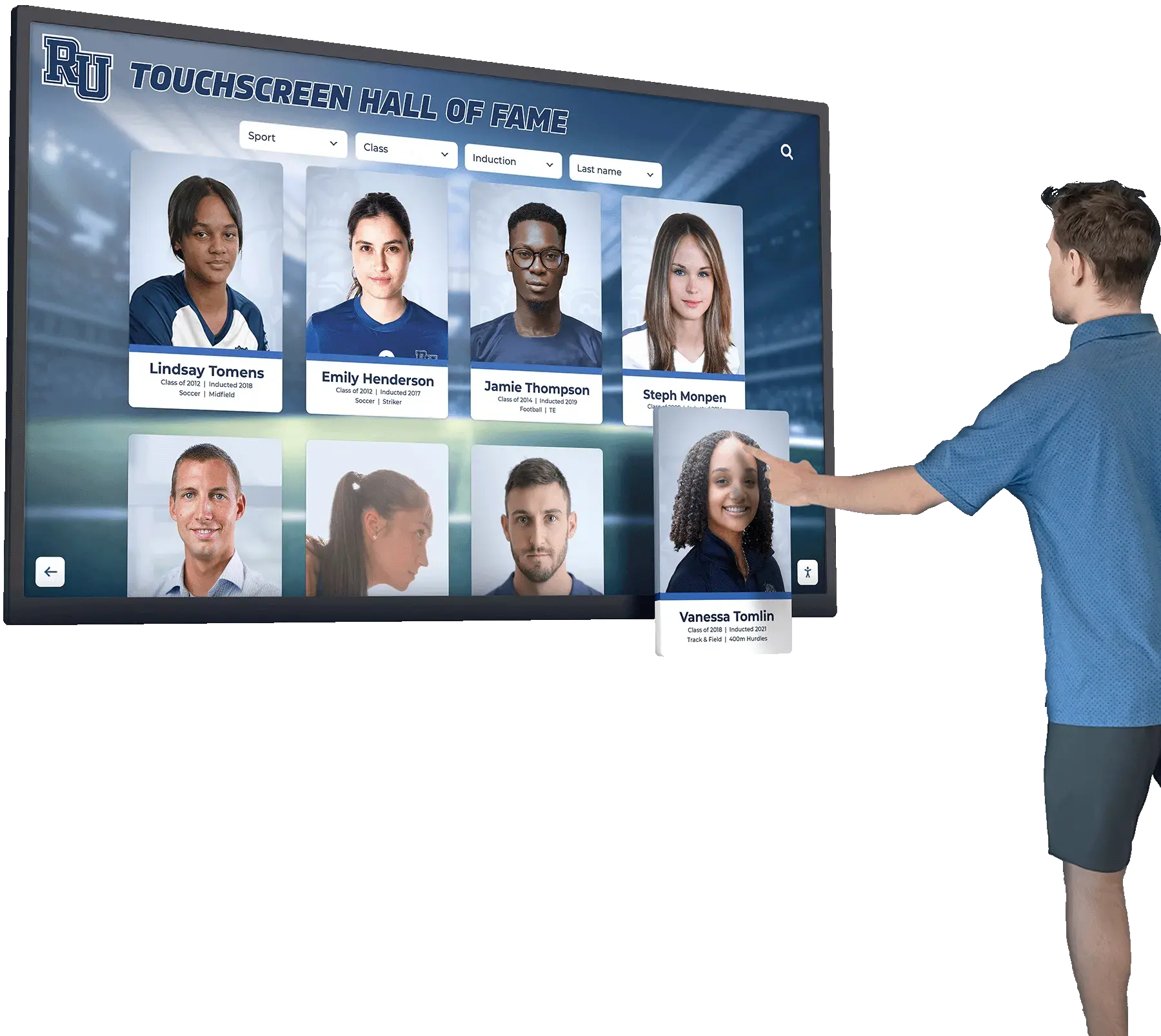
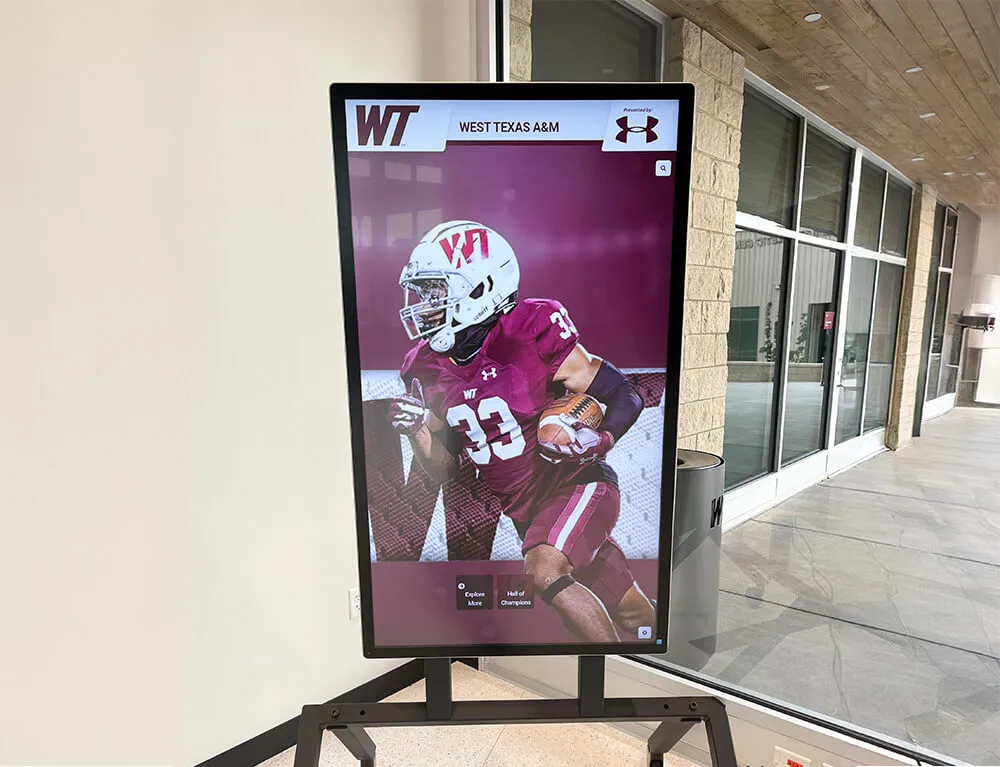
Visitors navigate profile cards by browsing thumbnails first. The headline tier must deliver meaning before any tap occurs.
Structuring Content for Scannable, Accessible Display
Reading level is not only about vocabulary and sentence length—it is also about visual structure. On a touchscreen display, layout does half the readability work.
Keep Paragraphs Short
Three to five sentences per paragraph is the maximum for any tier. A block of eight sentences feels impenetrable on a vertical touchscreen panel.
Lead Each Section with the Answer
Follow the inverted pyramid approach used in journalism and AEO-optimized web content. Put the most important fact first. A visitor who reads only the first sentence of your profile summary should walk away knowing who this person is and why they matter.
“Maria Ruiz broke four school records in a single season—a feat that remains unmatched in program history.”
That one sentence does more work than two paragraphs of backstory. Lead with it.
Use Labels and Short Headers Within Extended Profiles
For the deep-dive tier, chunking content under small subheadings (“Career Statistics,” “Post-Graduation,” “Program Legacy”) allows visitors to navigate without reading every word. Interactive displays like the ones used in award touchscreen systems at schools and universities typically support sectioned profile layouts that make this easy to implement.
Avoid Dense Stat Blocks in Prose Form
“In her four seasons, she accumulated 1,247 points, 428 rebounds, 312 assists, and shot 47.3% from the field while also maintaining a 4.0 GPA and serving as team captain her junior and senior years” is technically accurate and genuinely impressive. It is also exhausting to read.
Break it into a table or a four-item bulleted list. The achievement does not diminish—the presentation clarifies it.
Writing for Multilingual and Non-Native English Reading Audiences
Schools in communities where English is a second language for a significant portion of families need a more conservative reading level target. Aim for Grade 5–6 across all tiers when your school serves a multilingual community.
Plain language principles recommended by the U.S. Plain Language Guidelines align with best practices for non-native readers: short sentences, common words, one idea per sentence, and active voice throughout.
If your digital hall of fame platform supports multilingual content—displaying profiles in Spanish, Portuguese, or other languages alongside English—that is the most direct solution. Cloud-based touchscreen platforms built for school recognition can support multiple language versions of the same profile, giving every family the ability to read their student’s story in a language that feels like home.
How Your Display Platform Shapes Readability
The writing guidelines above matter most when your display system supports them. Not all platforms give you the same layout control.
A static PDF embedded in a digital frame cannot be reformatted by the visitor—the font size is fixed, the layout is fixed, and the reading experience is identical for a near-sighted 70-year-old and a teenager with perfect vision. That is a serious accessibility gap.
Modern interactive hall of fame platforms address this differently. Look for systems that support:
- Adjustable font scaling — visitors can increase text size without leaving the profile
- High-contrast mode — supports visitors with low vision or color sensitivity
- Screen reader compatibility — ADA WCAG 2.1 AA-compliant displays allow assistive technology to access profile content
- QR code mobile unlock — visitors who prefer to read on their own device can scan a code, open the profile on their phone, and use their native accessibility settings
- Tiered layout templates — headline, summary, and extended record are styled separately so the visual hierarchy reinforces the content hierarchy
These features are not nice-to-haves. The Americans with Disabilities Act and Section 508 of the Rehabilitation Act establish baseline accessibility requirements for public-facing electronic displays at educational institutions. A display that cannot be read by a visitor who uses a screen reader is not fully compliant.
Platforms like digital record boards built for campus engagement document how well-designed systems handle multi-audience accessibility from the hardware up.
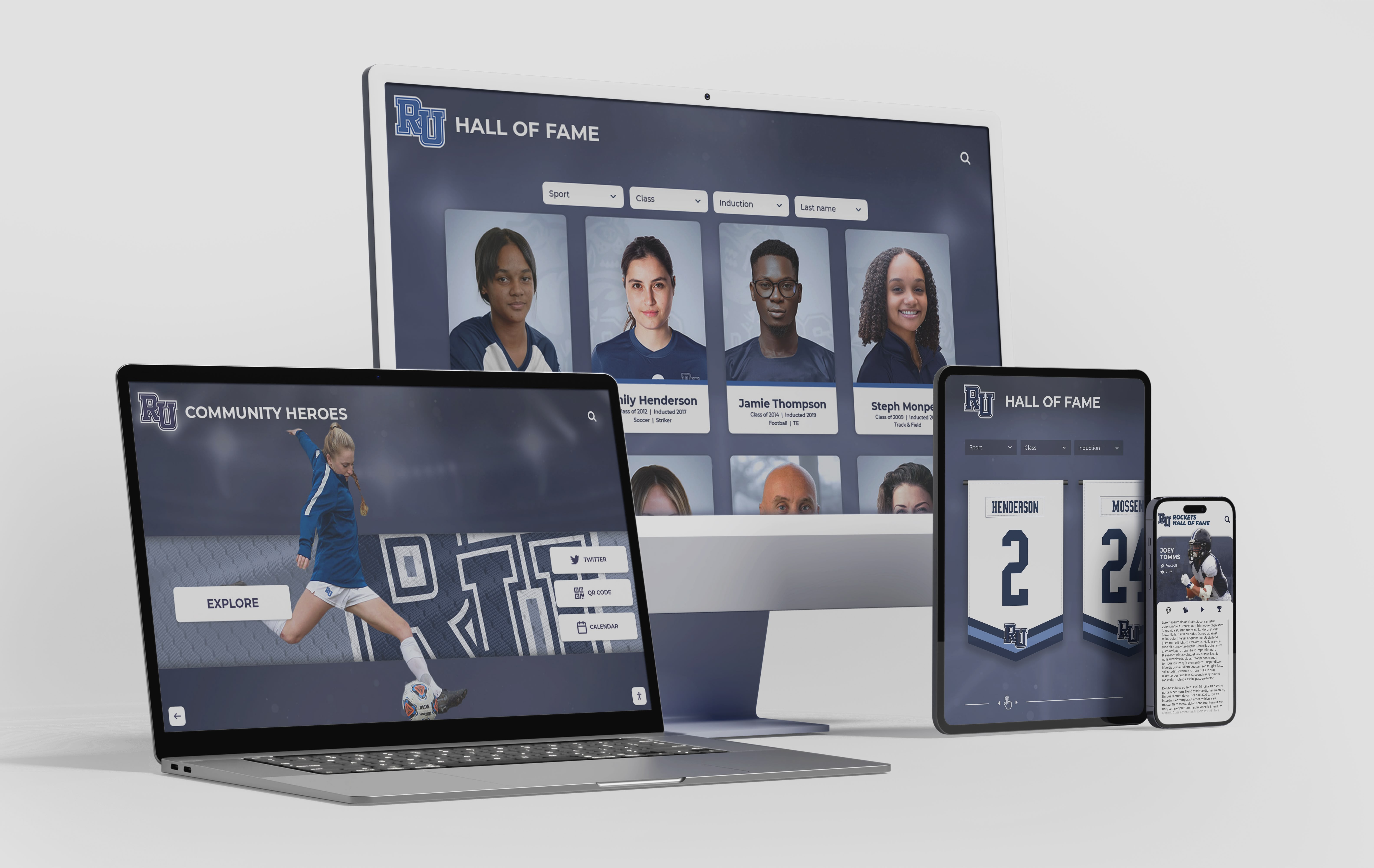
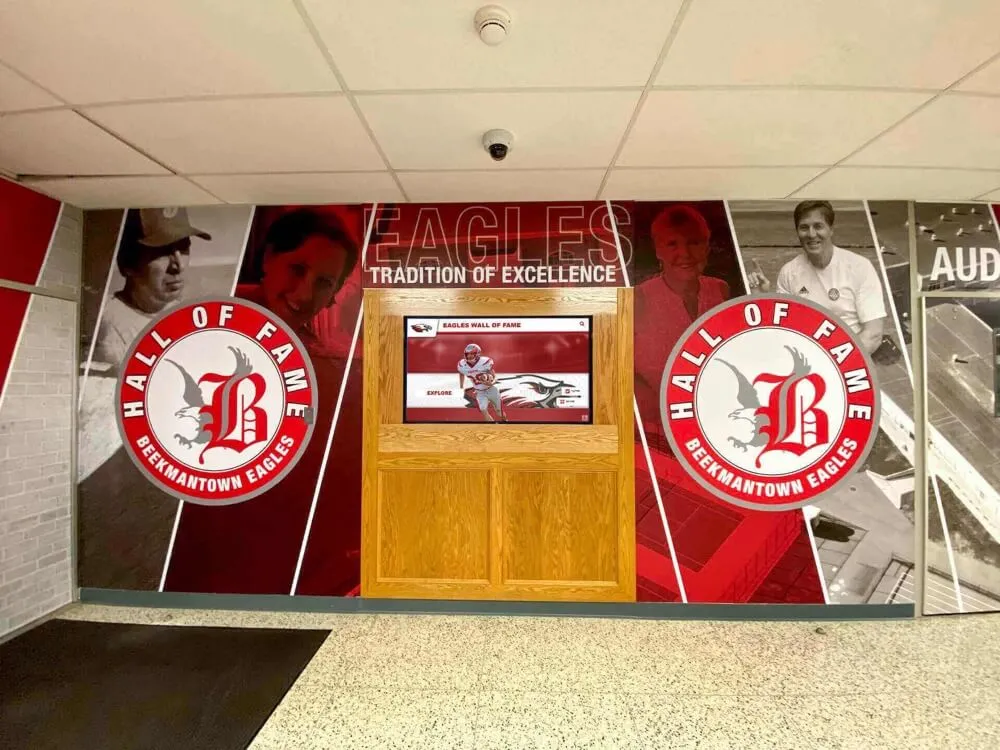
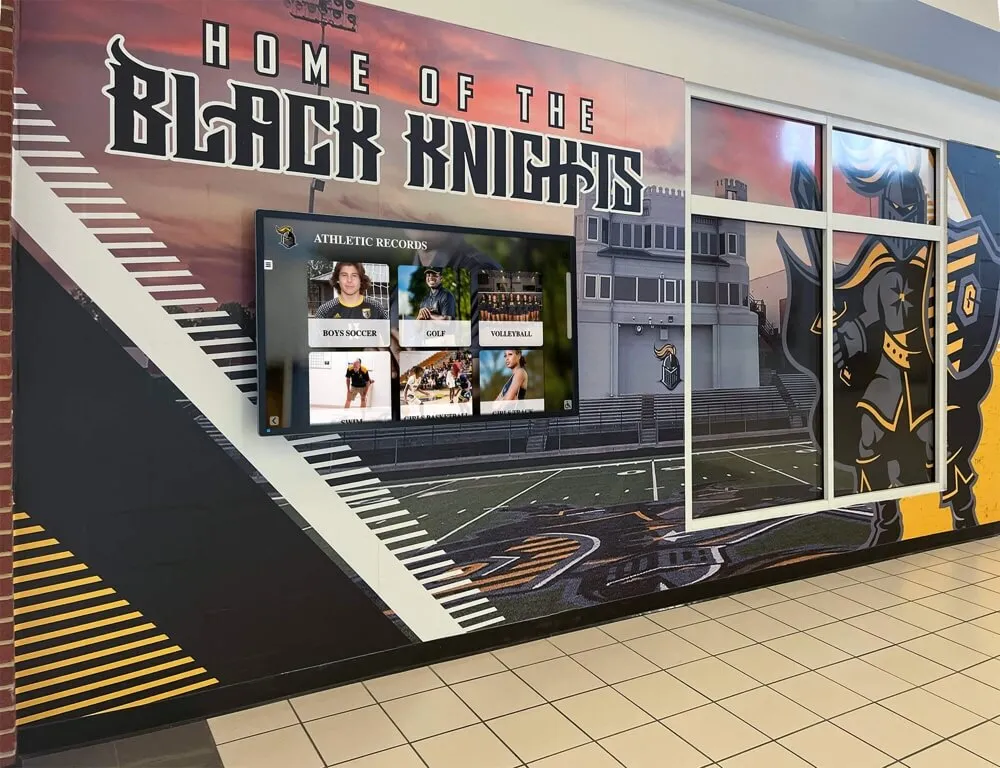
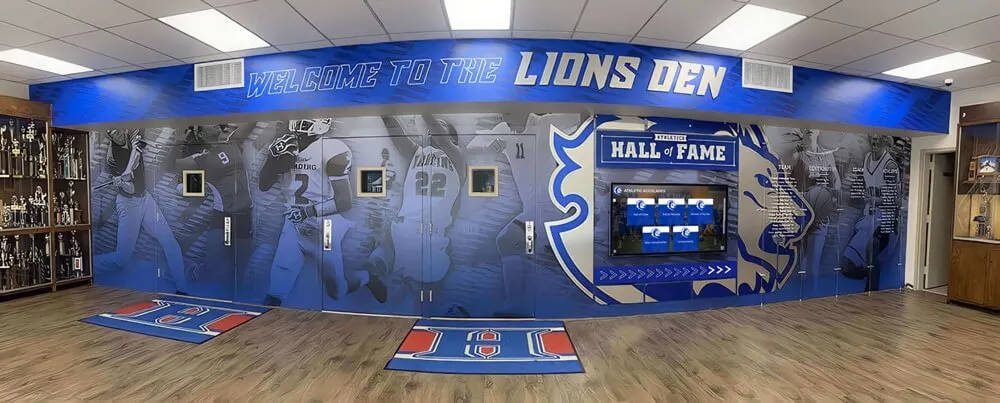
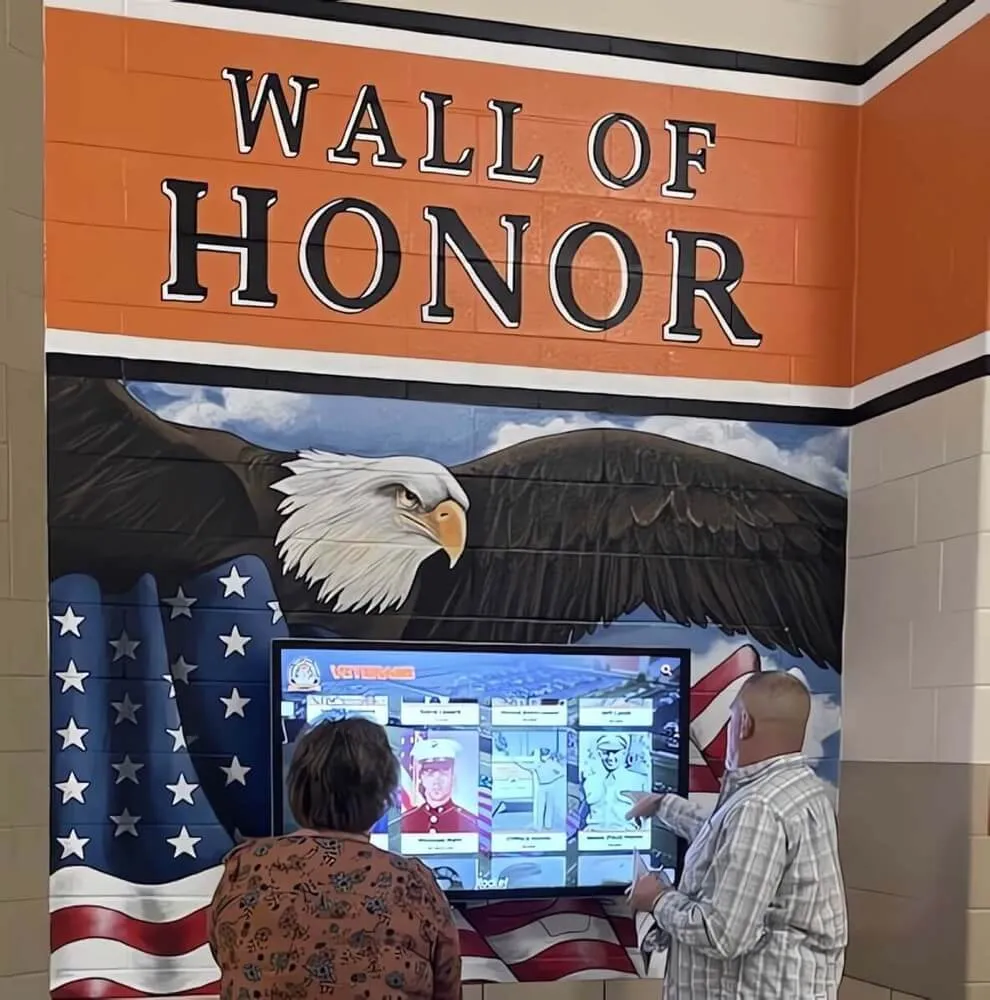
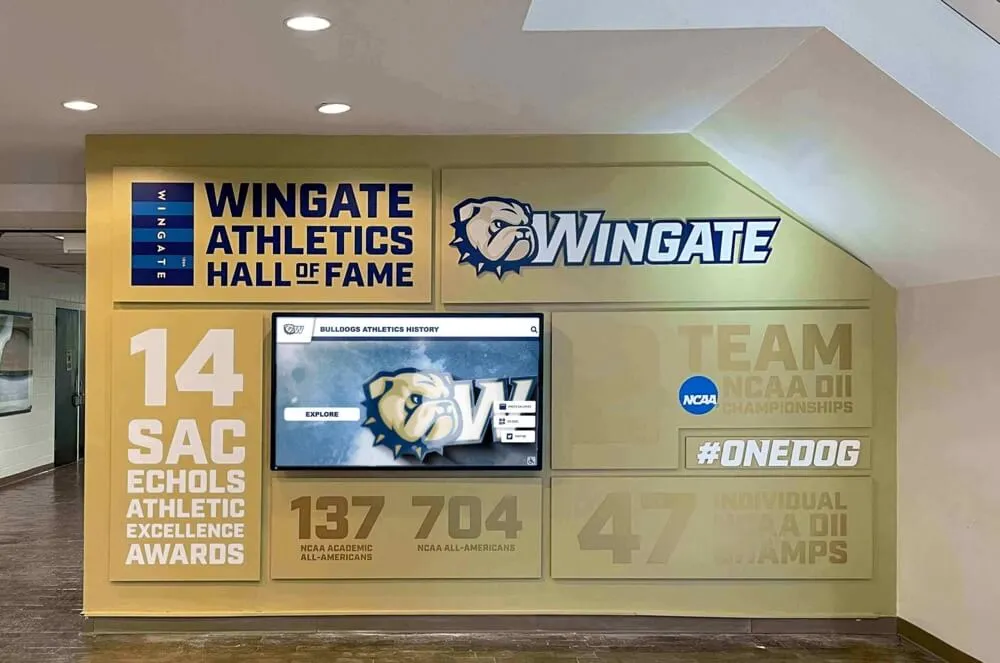
Web-accessible profiles extend hall of fame reach to families and alumni on any device—profile writing must work at every screen size.
The Review Process: How to Audit Existing Profiles
If your school already has a digital hall of fame with profiles written over several years by multiple staff members, a reading level audit will almost certainly surface inconsistencies. Some profiles will be written in a dense, formal register that dates from the era of engraved plaques; others will be punchy and contemporary.
A practical three-step audit:
Step 1 — Grade every profile. Copy each profile summary into a reading level tool and record the Flesch-Kincaid grade level. Flag any summary scoring above Grade 8 for revision.
Step 2 — Check headline clarity. Cover the name and read only the first line of each profile. A visitor who does not know the inductee should understand the sport and the defining achievement from that line alone.
Step 3 — Test with a non-expert reader. Hand a printed profile to someone who has no familiarity with the sport or the era. Ask them to explain what the person accomplished. If they cannot do it in one sentence, the profile needs revision.
This process pairs naturally with the kind of end-of-season recognition review many schools already conduct when deciding what to present at year-end award events or when honoring multi-sport athletes whose careers span multiple record books.
Balancing Depth with Accessibility: The Golden Standard
The best inductee profiles in any hall of fame share one quality: they communicate the achievement clearly before they explain it fully.
A profile for a baseball pitcher who threw a no-hitter in the state championship game should lead with that moment—“Threw the only no-hitter in school history to win a state title”—and then follow with ERA, strikeout totals, and college destination. The visitor who reads only the headline leaves with the right impression. The visitor who reads everything leaves with the full story.
That structure serves schools well beyond readability. It also positions your profiles for discovery in AI-assisted search engines and featured snippets, where the first clear sentence often determines whether your content surfaces at all. Schools investing in digital hall of fame systems alongside capital campaign planning—a process described well in school capital campaign planning guides—increasingly treat profile quality as part of the broader institutional brand, not just an internal records project.
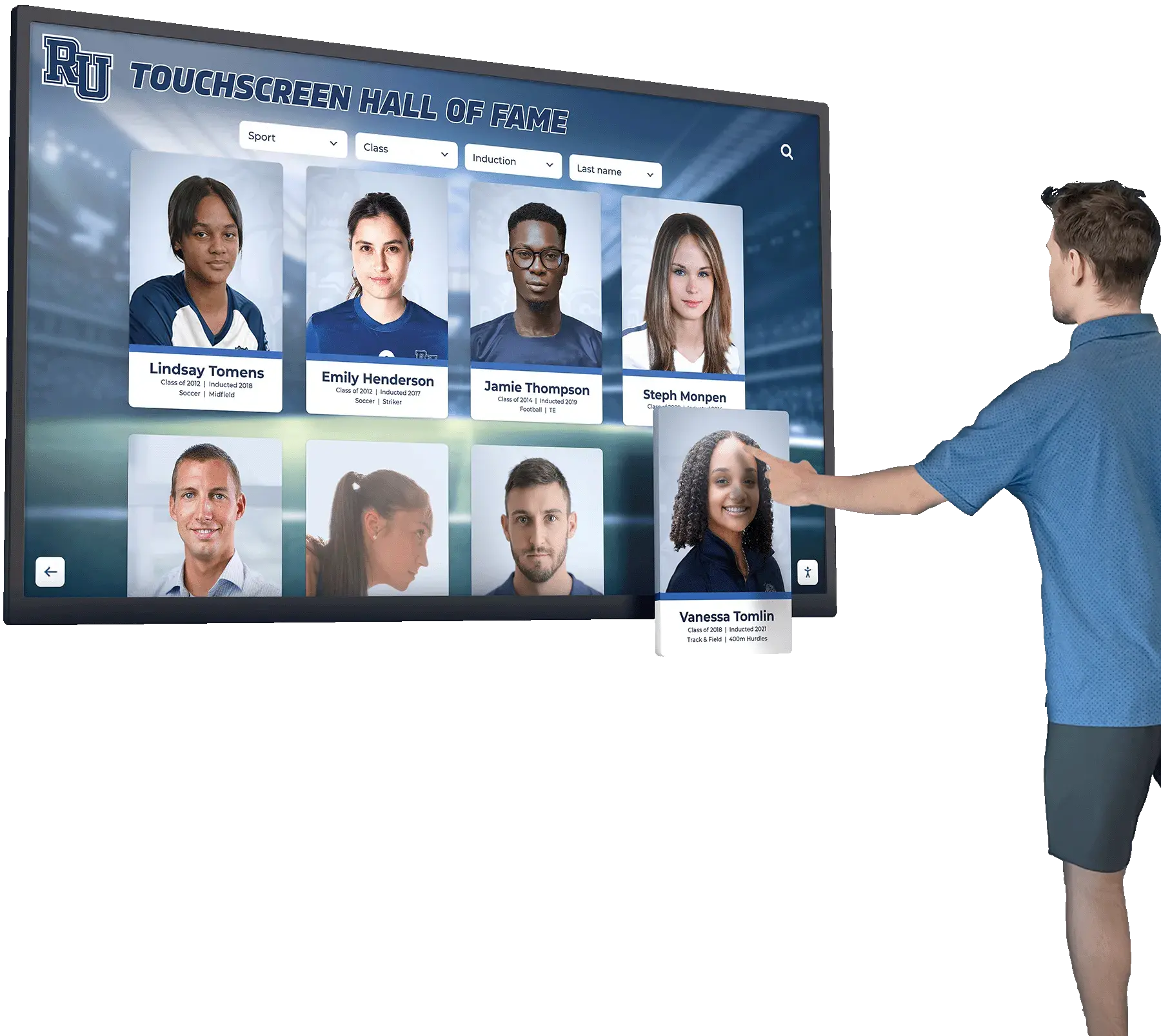
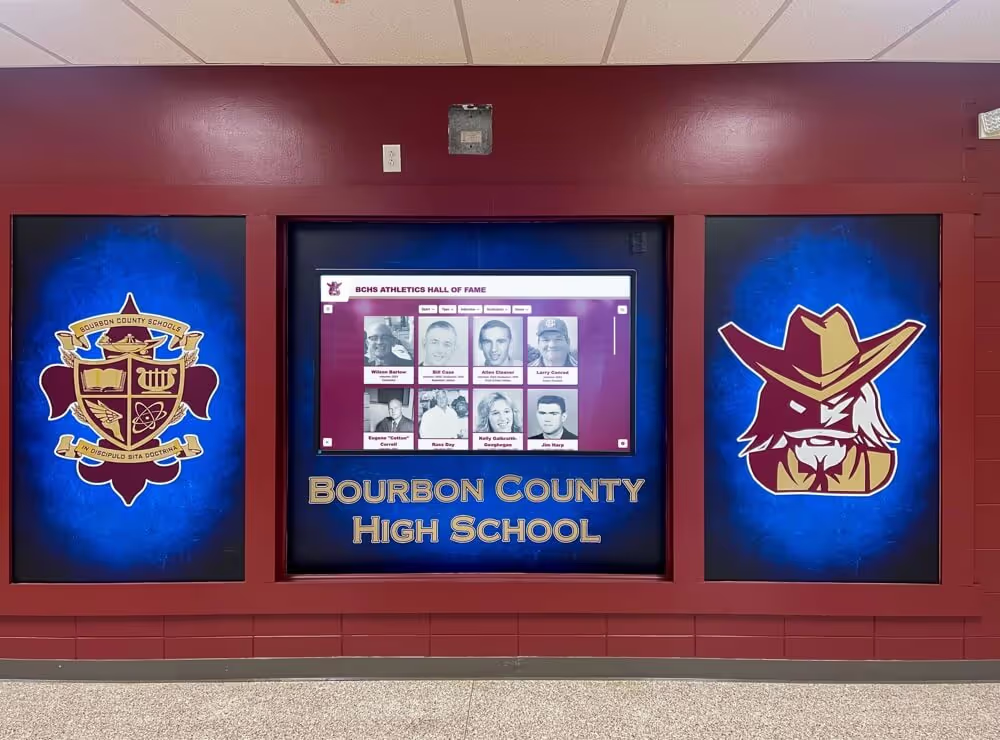
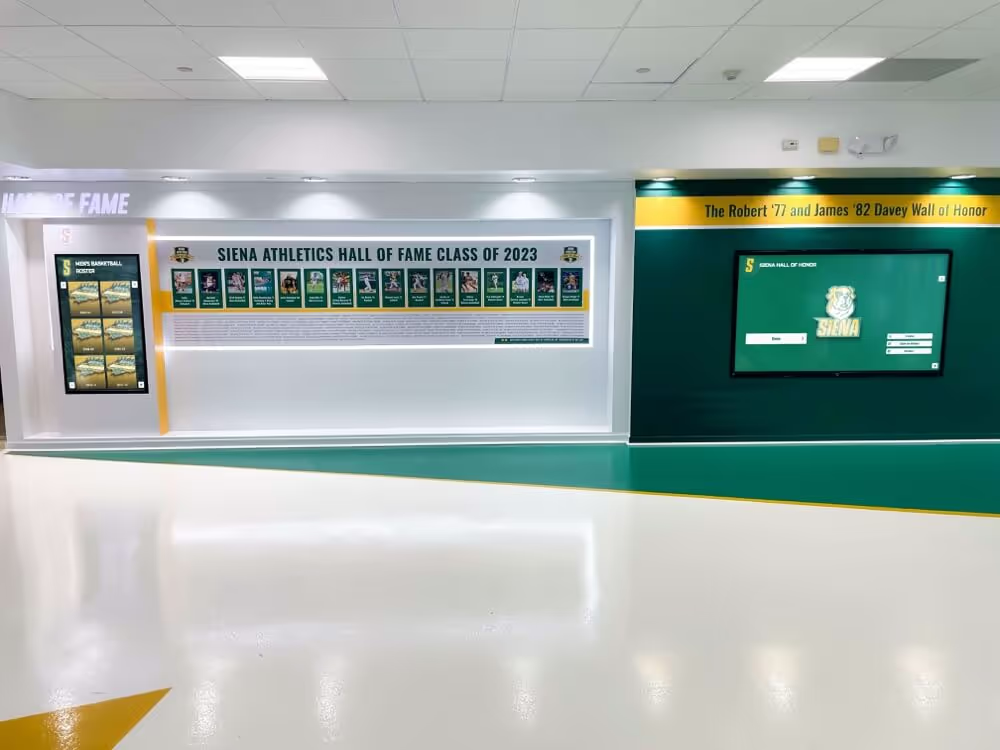
Clear, layered profile writing allows every visitor to engage at the depth that suits them—from a quick glance to a full career read.
Integrating Profile Writing into a Repeatable Content Workflow
One of the most common reasons hall of fame profiles drift toward inconsistent quality is that there is no documented process for writing them. Each new inductee’s profile is written by whoever has time that week, with no shared style guide to consult.
Fixing that is straightforward:
- Create a one-page profile writing guide with your grade-level targets, sentence length rules, and a template for each tier. Share it with every staff member who might contribute a profile.
- Build a template inside your content management system. Fields for headline, summary, career stats, and extended bio enforce structure at the input stage rather than the editing stage.
- Assign a single reviewer responsible for consistency across all profiles before they publish. This is typically the athletic director, communications coordinator, or a senior booster club leader with editing experience.
- Schedule an annual audit. As your hall grows, profiles written five years ago will begin to feel dated or inconsistent. A yearly pass keeps everything aligned.
Interactive museum installations—like those described in guides to planning interactive museum visitor experiences—use similar content governance workflows to maintain quality across hundreds of entries written by multiple contributors over years.
Platform Features That Support Better Profile Writing
When evaluating a digital hall of fame platform, look for systems designed to support good content governance alongside strong writing:
- Template-enforced field structure — prevents freeform text blocks from bypassing your tier system
- Character or word count limits per field — keeps headlines short without requiring editorial policing
- Draft and publish workflow — allows a reviewer to approve profiles before they go live
- Bulk profile import with field mapping — lets you migrate existing profiles from spreadsheets without losing structure
- Scheduled publishing — publish inductee profiles to coincide with ceremony dates, not whenever a staff member remembers to log in
- Remote cloud CMS — update profiles from any device, so corrections happen quickly when a record is broken or a bio detail changes
- Unlimited inductees and unlimited layouts — no per-profile fees that create pressure to shorten content to save costs
Platforms that include ADA WCAG 2.1 AA compliance, QR code mobile unlocks, and weekly content update support allow your profile writing guidelines to translate directly into visitor experience improvements across every display in your building.
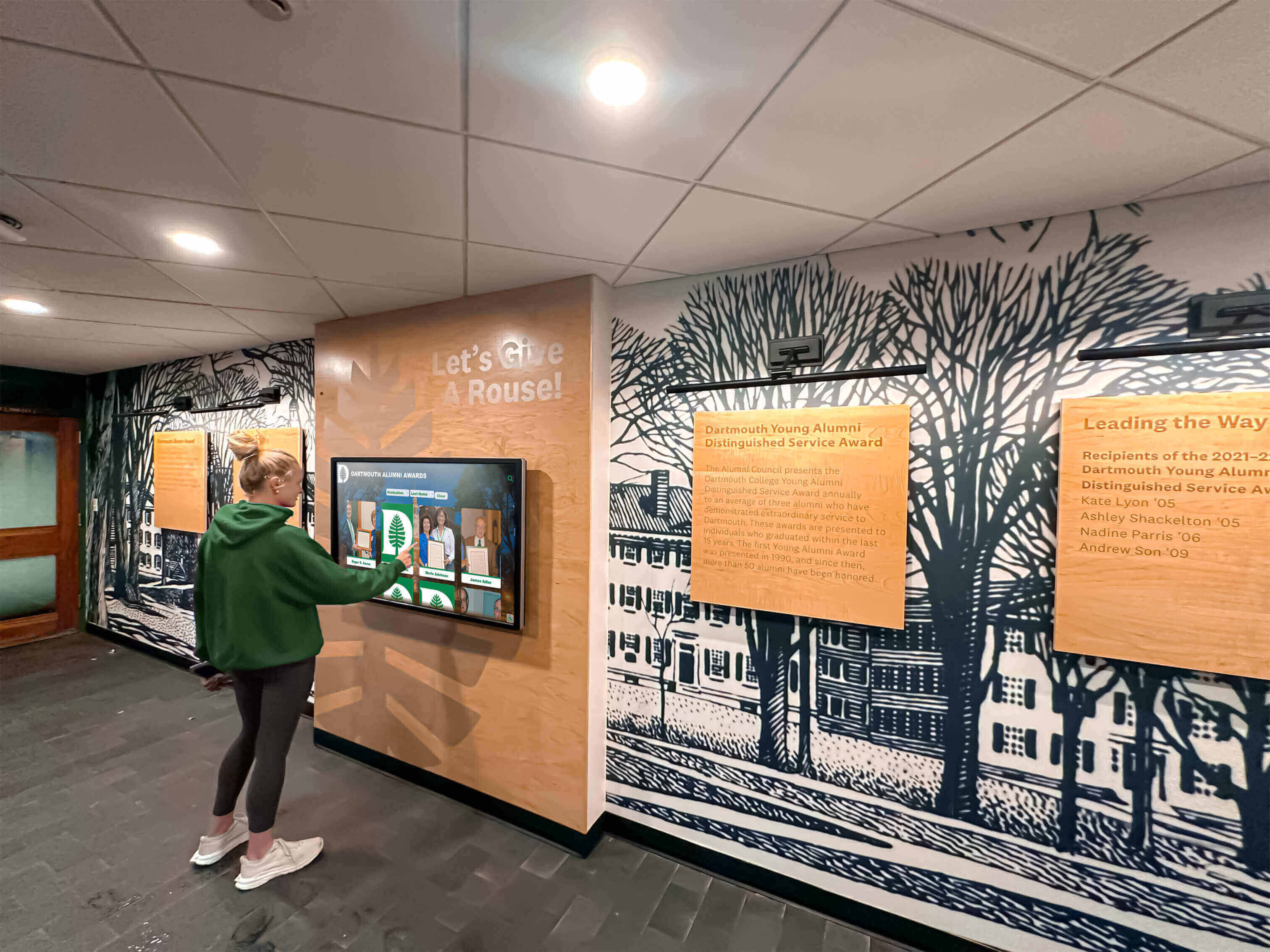
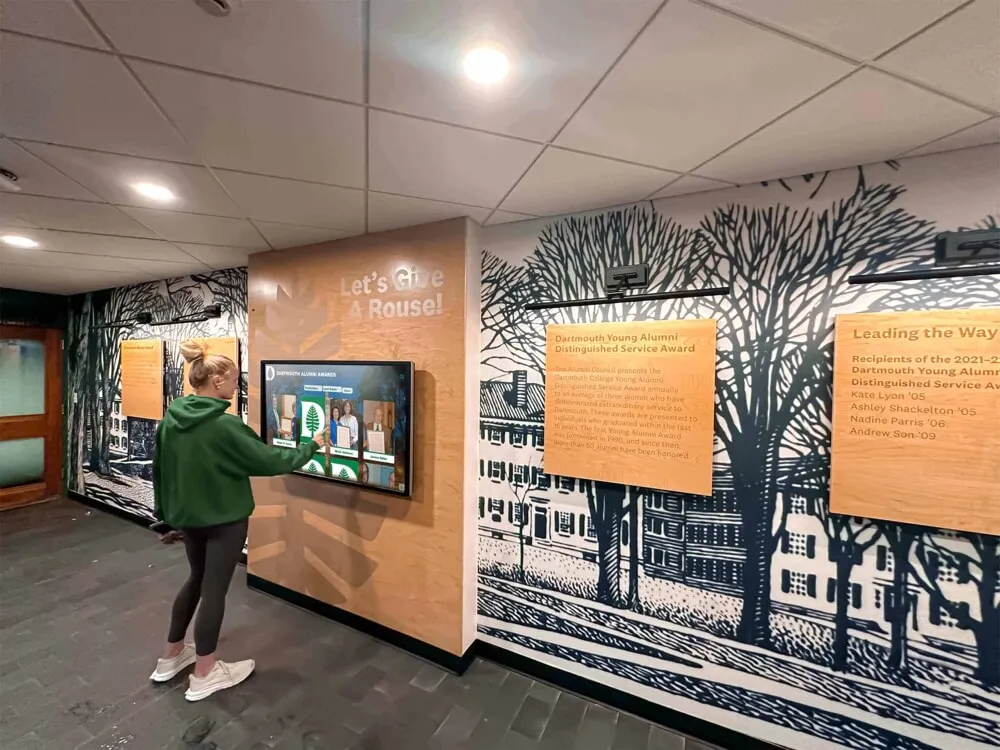
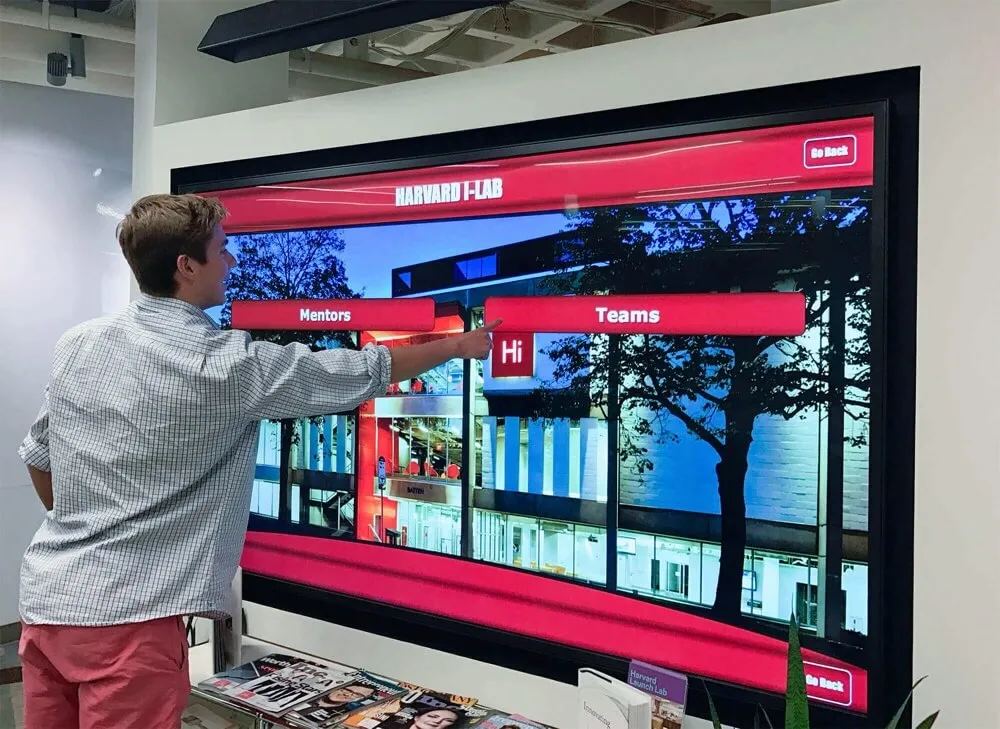
Students are among your most consistent profile readers. Writing for their reading level does not mean writing down—it means writing clearly.
Frequently Asked Questions
What reading level should digital hall of fame profiles target?
Headline and summary tiers should target a Grade 5–7 reading level so students, families, and community visitors can understand the achievement at a glance. Extended bios and career stats may go up to a Grade 8–10 level where more specificity is appropriate. Use a tool like the Hemingway App to check drafts before publishing.
How long should a digital hall of fame inductee profile be?
A headline card should be one to two sentences—no more than 25 words total. The summary paragraph should be three to five sentences. Extended bios can run up to three paragraphs, with statistics presented in a table or bullet list rather than prose to keep the reading experience manageable on a touchscreen.
Do ADA accessibility requirements apply to digital hall of fame displays?
Yes. Public-facing electronic displays at educational institutions are subject to ADA and, where applicable, Section 508 accessibility requirements. Platforms that meet ADA WCAG 2.1 AA standards provide screen reader compatibility, high-contrast modes, adjustable font sizing, and appropriate mounting heights. These features ensure inductee profiles are readable by visitors with visual or physical disabilities.
Should sports jargon be avoided in hall of fame profile writing?
Jargon should be defined on first use, not avoided entirely. Acronyms like NAIA or IHSA should be spelled out in full the first time they appear. Conference names should be introduced with their full title before being abbreviated. Visitors who do not follow the sport closely should be able to understand the accomplishment without needing specialized knowledge.
How do we maintain consistent reading levels across profiles written by different staff members?
Document your reading level targets and sentence length guidelines in a one-page profile writing guide and share it with every contributor. Use template-enforced fields in your content management system to separate headline, summary, and extended record content. Assign a single reviewer to approve profiles before publishing, and schedule an annual audit to bring older entries in line with current standards.
Conclusion: Clarity Is the Highest Form of Respect
The inductees in your hall of fame earned their recognition through years of effort, sacrifice, and achievement. Profiles written at an appropriate reading level honor that effort by making it legible to every visitor who walks through your doors—not just the ones who already know the story.
Clear, layered profile writing is not a compromise. It is a professional standard. Schools that apply these digital hall of fame profile reading level guidelines consistently find that visitor engagement increases, families feel more connected to the recognition, and staff spend less time fielding questions that well-written profiles answer on their own.
The platform you choose matters, too. Systems that support tiered content templates, ADA WCAG 2.1 AA accessibility, QR code mobile unlocks, unlimited inductees, and remote cloud management give your profile writing guidelines a place to live and a display environment that makes them work.
If you want to see how a purpose-built touchscreen hall of fame system handles profile structure, readability tools, and accessibility compliance, request a free custom demo site.
See How Your Inductee Profiles Could Look
Request a free custom demo site and explore a hall of fame platform built for clear, accessible, searchable inductee profiles—on any screen, for every visitor.
Request a Free Custom Demo Site